Technically Speaking with Amy: life science

Showing posts with label life science. Show all posts

Biomes Research


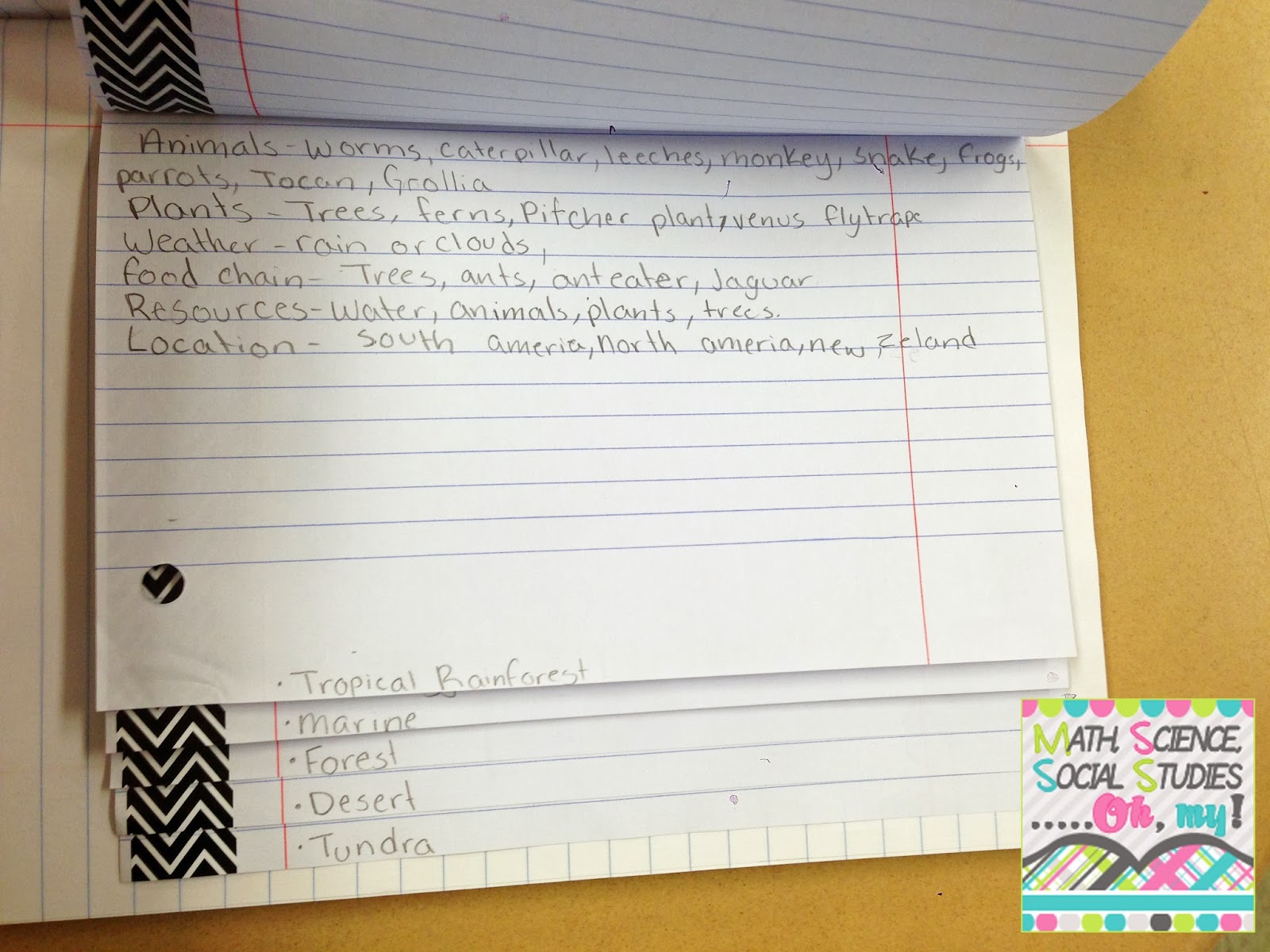
One of the first activities that we do in our life science unit is research different biomes. We focused on what type of plant and animal life the biome had, how the climate and weather effected those plants and animals, resources that the plants and animals had available to them, where the biome was located in the world and then the students had to create a food chain that could be found in that biome.

The students compiled all their information and put it on chart paper. They then presented the information to their classmates.


As the students presented their information, the students at their seats took notes in their interactive foldable graphic organizer.


0

Biotic and Abiotic Lab


This first day of school we did our biotic and abiotic lab.  I had several objects out on the lab tables and I had the students group them however they wanted (feather, paper, plastic and a coin).  I led a discussion on how each group had grouped their objects.  We then talked about what biotic and abiotic was. We looked around the room to classify things as being one or the other. We then went outside to do the same thing.
0

3D Cell Projects


I do this cell project every year during our life science unit. I LOVE all the different ideas that the students come up with!


I loved that this student used a box for the cell wall.


0

What do plants need to survive?


During our life science unit, we did a lab on what plants need to survive. I put mung beans in soil on a friday and by monday they were already sprouting.  Once the beans had grown for about a week, we started the experiment.

0

3D Cell Projects


Each year during our life science unit I have the students make 3-d models of both a plant and animal cell. The only requirements I give them are that they have to be 3-d, they have to have the parts labels, and tell the functions of each part (which can be put on paper and doesn't have to be a part of the model). My students amaze me each year with their creativity and the ingenuity of their projects. The following are pictures of some of this year's projects.


0

Concept Mapping

I was introduced to concept mapping several years ago, but didn't really start using it my classroom until this school year.  When I was asked to be a science trainer for our district in 2011, the district wanted us to use concept mapping as a way to teach vocabulary. They wanted us to encourage our teachers to use concept mapping instead of your standard definitions to learn science vocabulary.

Since I had never used this type of mapping in my lessons, I spent quite a bit of time watching the other trainers working with the teachers and learning how to use them myself. Unfortunately, I don't think many of the other teachers in my building are using the maps, so my students don't see them until 5th grade.

This year I have tried to implement them fully into our science curriculum (I'm thinking about doing social studies next year). We start off the same each time.

After each science activity (we use the FOSS kits), the students come up with words to put on our word wall or word bank.  Each day we use a different color.

5th grade Human Body FOSS kit
After coming up with our words, we then put them on the concept map.  The hardest part for the students seems to be the wording that ties each of the words together.  I try not to lead them into what I think it should be, but to let them come up with how the words connect with each other. 

5th grade Human Body FOSS kit
Each day after we are satisfied with what we have done to the map, the students copy that part of the map into their science journals.

5th grade Food Webs and Chains FOSS kit

For more information on using concept maps in your classroom, I have listed a couple of resources:

This is an article from Stanford, Using Concept Maps in the Science Classroom, can give you a little more insight to mapping in your science class.

Science-West also has an interesting read:  Concept Mapping.

Do you use concept maps in your classroom?  We would love to hear about how you successfully implement it into your curriculum.

2